Sales: +91 9600 70 3224
- Support


AI-powered anomaly detection driving risk-based step-up, passwordless options, and a factor library you can extend.
MFA on every request is what gets it switched off. Akku's AI engine detects threats and abnormal behaviour in access requests and triggers step-up authentication only when the risk signals warrant it, so a routine sign-in from a known device on a known network stays one step, and the same account arriving from somewhere new meets a second factor. Passwordless removes the password as the primary factor entirely.
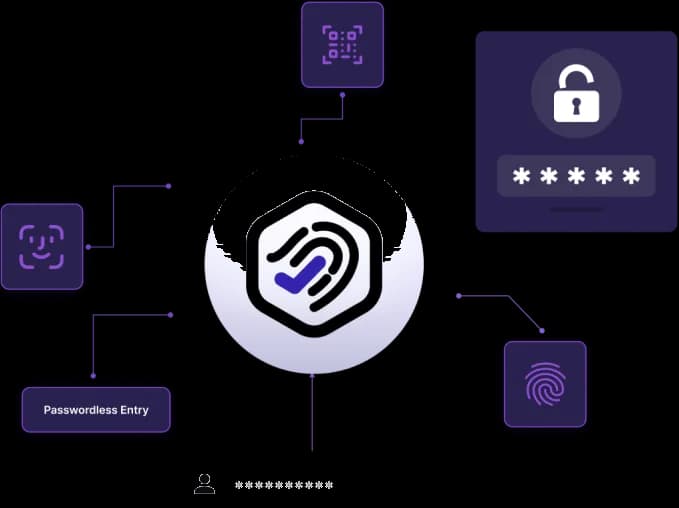
Multi-factor authentication requires a second proof of identity beyond a password. Adaptive MFA decides when to require it. Instead of applying the same challenge to every request, it evaluates the risk in each one and escalates only where the risk is there, which is what keeps strong authentication from becoming something people work around.

An AI engine detects threats and abnormal behaviour and triggers adaptive, risk-based step-up authentication. The decision to challenge is not a static rule someone has to keep tuning as the business changes. What counts as normal for an account is derived from that account's own pattern.
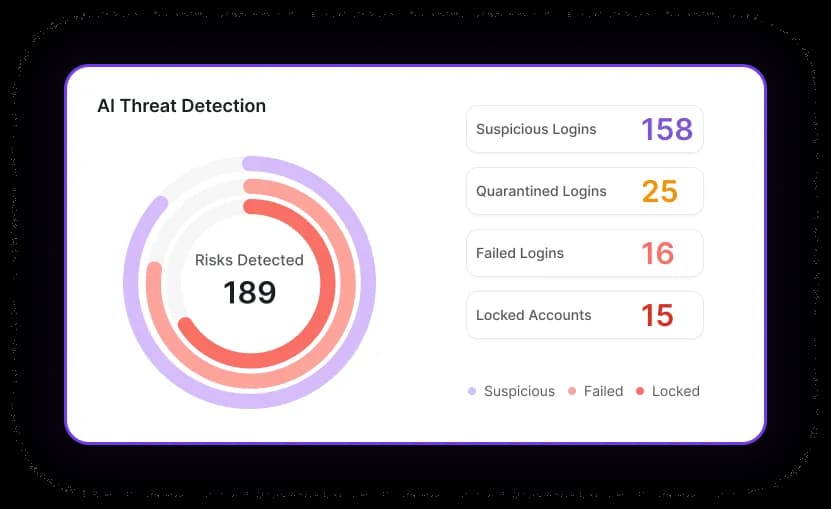
Passwordless authentication takes the password out of the primary position across access points, which removes the credential from the position where it does the most damage. Where passwords remain in use, policy enforcement, self-service reset and sync are handled separately.

A library of authentication factors covers the standard methods. Where you need something the library does not have, bring your own factor and use it alongside the rest. Which factors get used most is visible in access monitoring, so the ones people actually reach for can be prioritised.