Sales: +91 9600 70 3224
- Support


Comparing two enterprise PAM platforms across session management, credential security, deployment architecture, compliance, and total cost of ownership.


iRaje PAM is an established India-based Privileged Access Management solution with over two decades of experience in the enterprise security space. It offers credential vaulting, session recording, MFA, RBAC, just-in-time access, and compliance reporting, deployed primarily across banking, government, and critical infrastructure environments.
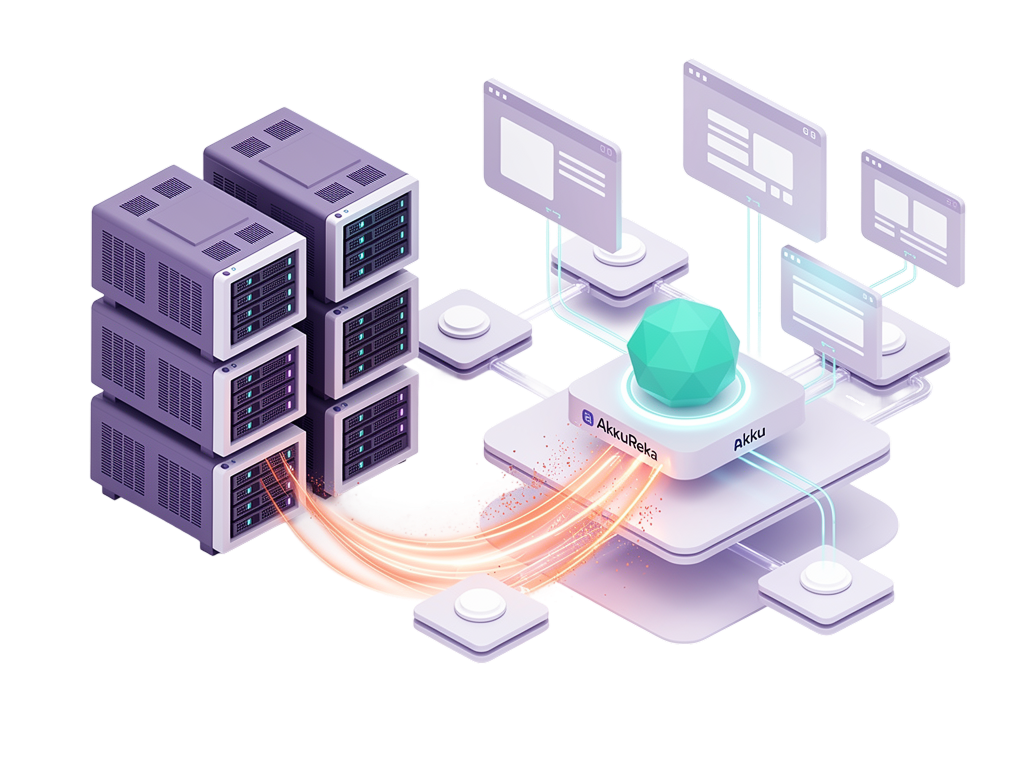
Akku PAM is a modern, cloud-native PAM platform combining AkkuReka (zero-trust session proxy), AkkuArka (dynamic per-session credential engine), and Akku IAM (adaptive identity layer) into a single unified platform. It is built for mid-market and growing enterprises that need enterprise-grade privileged access security without the operational overhead of legacy enterprise PAM deployments.
This page provides a detailed, honest comparison of both solutions across all standard PAM capability areas, to help IT leaders, security teams, and procurement stakeholders understand where the two products align, where they diverge, and where each is the stronger choice for a given organisation.
Both platforms address enterprise privileged access management. The most significant architectural differences lie in three areas: how credentials are managed, how sessions reach target systems, and how integrated the IAM and PAM layers are.
iRaje PAM is a fully browser-based, agentless solution that renders privileged sessions inside the web browser. Credentials are stored in a centralised vault and rotated on a schedule. The platform serves as the central access point with target systems connecting through it.
Akku PAM uses a different model. Users access the Akku portal through a browser, but connections to target systems happen via native clients — Windows RDP client, SSH client, database clients — proxied transparently by AkkuReka. Credentials are generated fresh per session by AkkuArka and cease to exist when the session closes. The architecture is built around outbound-only workers that dial out to the Akku cloud, with no inbound firewall rules required.
Akku PAM vs iRaje PAM — complete capability breakdown
SSH session monitoring and recording supported. Command restriction on SSH-accessed systems available.
Zero-trust SSH proxy via AkkuReka with SMART Audit Trails — every command logged with exact timestamp. Granular Access Control blocks restricted commands at execution and logs the attempt with failed status.
Sessions rendered in-browser — fully browser-based architecture, no native client required on endpoint.
Full RDP proxy via AkkuReka with complete session recording. Users connect via native Windows RDP client through the Akku portal — no browser rendering overhead.
Database access management and monitoring supported. Integrates with Oracle, MySQL, IBM Db2, and SQL.
Transparent proxy for PostgreSQL, MySQL, and MongoDB — per-session dynamic credentials, full SQL query capture per session.
Not highlighted as a native capability.
Native Kubernetes target support built into AkkuReka — controlled, recorded, session-gated access.
Ticketing and maker-checker workflow integrations supported.
Native request-and-approve workflow — session opens only upon explicit approval, every step logged.
Available from admin console.
Instant termination from unified admin console — no SIEM or ITSM dependency.
Native session sharing between privileged users — no third-party tools required.
Not a primary feature.
Centralised vault — credentials stored, rotated on a schedule, injected at session time. Credentials persist between sessions.
AkkuArka generates a fresh credential at the point of every request — new password, new user, or new SSH key depending on target configuration. Credential ceases to exist when session closes.
Yes — credentials injected by the gateway; user does not see password.
Yes — credentials injected silently by AkkuReka; user never sees, handles, or knows the target credential.
Password rotation model — credentials persist until next rotation cycle.
All target types — every session generates a unique credential that ceases to exist on close. No persistent credential exists between sessions.
Typically vault-managed and rotation-based.
Never required — every session generates its own.
Limited exposure depending on workflow configuration.
Never exposed — credentials never leave AkkuArka in usable form.
Supported.
Integrated into the platform.
Broad MFA support including OTP, hardware tokens, and biometrics.
Adaptive step-up MFA via Akku IAM — TOTP, Push, Google Authenticator, Microsoft Authenticator, Cisco Duo, hardware token, YubiKey.
Supported through PAM controls.
Built into Akku IAM — device, location, IP, time-of-day anomalies trigger step-up automatically before the session reaches AkkuReka.
Supported.
Standalone policy controls in Akku IAM — natively enforced.
Time-bound access with auto-expiry, supported with self-service workflow.
Time-bound sessions, auto-expired on close, no standing privileges.
Role-based access with time-restricted access controls.
Unified IAM and PAM policy engine — one configuration governs both SaaS applications and privileged infrastructure.
Separate PAM and IAM coordination may be required depending on deployment.
Remove from Akku IAM — privileged access gone everywhere, immediately. No separate PAM offboarding step.
Limited publicly available information on device posture enforcement.
Supported natively via Akku IAM — non-compliant devices blocked before session opens.
Agentless network discovery — scans for live devices, hidden assets, and active ports; reports onboarding compliance status.
Target discovery during onboarding.
Full recording and replay.
Full recording — screen video for RDP, terminal recording for SSH, query logs for databases. Centrally stored, tamper-proof, searchable.
Session replay and command tracking supported.
Every SSH command captured individually with exact timestamp — sequential, tamper-evident, searchable. Automatic. No target server configuration required.
Supported.
Full SQL query capture per database session — PostgreSQL, MySQL, MongoDB.
Supported — reports available on demand or scheduled via email.
On-demand export — session recordings, command logs, approval trails — for ISO 27001, PCI-DSS, SOC 2, HIPAA, RBI, SEBI, DPDPA.
India-headquartered — compliance reporting for Indian regulatory requirements supported.
India/APAC regional SaaS hosting — DPDPA-aligned natively.
Yes
Yes
Depends on deployment maturity and configuration.
Day-one audit readiness — no professional services engagement required to align to specific audit frameworks.
Centralised browser-based PAM — application server, vault server, with HA and DR components for enterprise availability.
Cloud-native SaaS with outbound-only AkkuReka workers deployed near target infrastructure. No inbound firewall rules required.
Requires connectivity to the PAM server from target systems.
Single lightweight outbound-only agent per isolated zone. No product stack inside the workload zone. No credentials stored on agent host between operations.
Longer enterprise rollout — Gartner Peer Insights reviewers note setup and integration require expert involvement.
Hours to days — self-serve onboarding, no specialist required.
Broader infrastructure deployment — application server, vault server, HA and DR components.
Lightweight — SaaS plus outbound worker only.
Multiple enterprise integrations and modules — SIEM connectors, ticketing integrations, and additional enterprise components.
Single unified platform — session proxy, credential engine, adaptive IAM, MFA, and audit all included.
Better suited for organisations with dedicated PAM operations teams.
Designed for lean IT teams — no dedicated PAM engineering headcount required.
License-based — typically structured by number of users or privileged accounts. Gartner Peer Insights reviewers describe iRaje as expensive relative to alternatives.
Per-user and per-asset pricing — transparent and predictable, no perpetual licensing, no per-module charges.
Enterprise-managed deployment model — internal team manages upgrades and maintenance.
Managed SaaS — automatic updates, no internal patching cycle.
The specific ways Akku PAM outperforms iRaje PAM for modern enterprises.
iRaje PAM's credential model relies on a centralised vault with scheduled credential rotation. Passwords are stored, rotated on a configurable schedule, and injected at session time. While this is a meaningful improvement over static credentials, the password persists in the vault between sessions and is reused until the next rotation cycle.
AkkuArka generates a fresh credential at the point of every access request — for every target type. Depending on how the administrator configured the target during onboarding, that means a new password, a new user with scoped permissions, or a new SSH key. The credential is injected silently by AkkuReka, exists only for the duration of the session, and ceases to exist the moment the session closes. There is nothing stored between sessions. Nothing to steal between uses. Nothing to rotate.
iRaje PAM follows a centralised deployment model that requires connectivity to the PAM server from target systems. For organisations managing infrastructure in isolated networks, this creates the familiar choice: open the network or deploy a full PAM stack inside every protected zone.
AkkuReka's worker model dials out. No inbound ports required on workload networks. For isolated networks, air-gapped environments, and private VPCs, a single lightweight agent operates inside the zone with outbound connections only. No product stack, no credentials stored on the agent host between operations.
For banks, hospitals, manufacturers, and government environments where security teams will not approve inbound firewall rules into sensitive zones, this is the difference between a PAM deployment that proceeds and one that stalls.
iRaje PAM is fully browser-based — privileged sessions are rendered inside the web browser. This delivers an agentless experience for end users but concentrates session rendering on the PAM server and can introduce performance overhead under load, particularly for high-resolution RDP sessions or heavy terminal activity.
Akku PAM takes a different approach. Users access the Akku portal through a browser, but connections to target systems happen via native clients — Windows RDP client for remote desktops, SSH client for Linux servers, database clients for PostgreSQL, MySQL, and MongoDB. AkkuReka proxies the connection transparently. The Akku portal handles management and access control; the native client handles the actual session — eliminating the single-server rendering bottleneck of fully browser-based architectures.
iRaje PAM does not highlight Kubernetes session access as a native capability. AkkuReka includes Kubernetes as a built-in target — controlled, session-gated, fully recorded access to K8s clusters for DevOps and cloud-native engineering teams.
iRaje PAM is a dedicated PAM solution. For organisations needing IAM capabilities — SSO across SaaS applications, adaptive MFA across all workforce access, full identity lifecycle management — a separate IAM product is typically required. This means two products to deploy, integrate, and maintain in sync, with the risk that an offboarded user retains access somewhere because someone forgot to update the second system.
Akku PAM is built on Akku IAM. They share one identity store, one policy engine, and one audit log. The same identity that governs a user's SaaS application access governs their privileged infrastructure access. Remove a user from Akku IAM and their privileged access is revoked everywhere, at that moment, with no separate PAM offboarding step.
iRaje PAM deployments typically require expert involvement for setup, integration, and configuration. This is appropriate for enterprise rollouts but introduces lead time and external dependency that mid-market organisations often cannot absorb.
Akku PAM is self-serve. IT teams configure the platform, deploy the AkkuReka worker, and begin managing privileged sessions within days — no specialist implementation required, no mandatory consulting engagement.
Be honest about your stage and constraints — here's where each platform actually shines.
Common questions from IT leaders evaluating Akku PAM vs iRaje PAM.
Still have questions? for a detailed walkthrough.
iRaje PAM stores credentials in a centralised vault and rotates them on a schedule. The credential persists in the vault between sessions and is reused until the next rotation cycle. AkkuArka generates a fresh credential at the point of every access request — a new password, a new user, or a new SSH key depending on how the target system was configured. The credential exists only for the duration of the session and ceases to exist when the session closes. There is nothing stored between sessions and nothing to rotate.
No. Users access the Akku portal through a browser, but connections to target systems happen using native clients — Windows RDP client, SSH client, database clients — proxied by AkkuReka. iRaje renders sessions entirely in the browser. The native client architecture means no browser rendering overhead and no single-server bottleneck for session display.
Yes — this is one of Akku PAM's strongest architectural differentiators. AkkuArka and AkkuReka stay central. A lightweight agent binary deployed inside the isolated network makes only outbound connections. No inbound firewall rules. No product stack inside the workload zone. No credentials stored on the agent host between operations. See our Why Akku Works Where Others Don't page for full details.
Most organisations deploying Akku PAM are live within hours to days. No professional services engagement is required. iRaje PAM deployments typically take longer, with Gartner Peer Insights reviewers noting that setup and integration require expert involvement, particularly for complex enterprise environments.
Yes. Akku PAM's per-session credential generation, session recording, SMART Audit Trails, approval workflows, and access governance directly address privileged access requirements under DPDPA, RBI, SEBI, ISO 27001, SOC 2, and PCI-DSS. Akku PAM is delivered as a SaaS platform with regional India/APAC hosting, providing native data residency alignment for DPDPA.
iRaje PAM is a dedicated privileged access management solution. Full identity lifecycle management — provisioning, directory sync, SSO across SaaS applications, IGA — typically requires a separate IAM product. Akku PAM is built on Akku IAM. They share one identity store, one policy engine, and one audit log, covering both privileged infrastructure access and enterprise application access in a single platform.
Akku PAM uses per-user and per-asset pricing — transparent and predictable, with no perpetual licensing and no per-module charges. iRaje PAM uses license-based pricing typically structured by number of users or privileged accounts. Gartner Peer Insights reviewers have described iRaje as expensive relative to alternatives in the market.
Akku PAM is purpose-built for mid-market organisations — 50 to 5,000 employees — that need enterprise-grade PAM without the deployment complexity and operational overhead of legacy enterprise platforms. iRaje PAM is typically better suited to large enterprises with dedicated PAM operations teams and the budget and time for a structured implementation.